
Besides May being a month to honor the Blessed Mother Mary, our mothers, graduates, Mental Health Awareness, Teacher Appreciation, etc., May is also National Celiac Disease Awareness Month, which recognizes an autoimmune disease that renders a person highly intolerant to gluten. According to some experts, the disease affects 1% of the global population, and is on the rise. For Catholics, the celiac condition comes with a serious sacramental complication — how do you receive the Eucharistic species if you’re allergic to bread?
As the number of celiac diagnoses rises, there has been increased use in parishes such as ours for use of so-called “gluten free” hosts. It is important for us to first understand what is required of the host for it to be “valid matter” for the Eucharist. The consecration of bread and wine into the body and blood of Jesus Christ in the Eucharist is the constituent part of the celebration of Mass. For validity, the Church teaches that the Eucharistic sacrifice “must be offered with bread and with wine in which a little water must be mixed.” 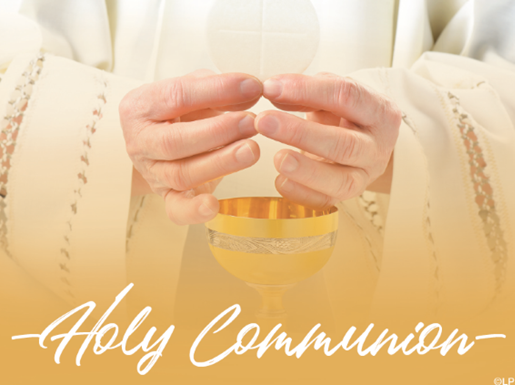
The bread to be used, according to the Code of Canon Law, “must be only wheat, and recently made so that there is no danger of spoiling.” But the problem for celiacs is that the process of making bread from “only wheat” necessarily involves gluten, which is a structural protein found in wheat — gluten gives the dough its elasticity.
So, can you ever actually have totally “gluten free” bread — even hosts — made from wheat only? The Dicastery for the Doctrine of the Faith, which has jurisdiction over defining the essential matter for the Mass, issued a circular letter to the world’s bishops in 2003 making the point explicitly: “Hosts that are completely gluten-free are invalid matter for the celebration of the Eucharist.” No gluten, however, is very different from low gluten.
In most cases, even people with severe intolerance to gluten can receive Communion using a very, very low gluten host, which is what we provide at Corpus from a certified producer. But what if really low gluten is still too much? While valid ultra-low gluten hosts are usually a practicable alternative for most people suffering from conditions like celiac disease, some people have such a violent allergy to gluten that any amount can be a medical problem. So what are they supposed to do?
Most Catholics know that the Church has always taught that you can receive under a single species, and that to receive the host alone constitutes the full reception of the sacrament by a Catholic. That is why we have not offered the chalice here at Corpus. But does the reverse work, too? Can a Catholic receive Communion only via the chalice? Yes. In fact, the Church does not teach that the host is more the sacrament than the chalice, or that only one of the species but not the other can constitute full Communion.
The General Instruction of the Roman Missal states that sacred pastors “above all should instruct the Christian faithful that the Catholic faith teaches that Christ, whole and entire, and the true Sacrament, is received even under only one species [either one] and hence that as regards the resulting fruits, those who receive under only one species are not deprived of any grace that is necessary for salvation.”
While the Catechism of the Catholic Church affirms that the normal way in which Catholics receive under one kind is to receive only “under the species of bread,” it makes it clear that this is a pastoral norm, and not reflective of a doctrine. “It is important for pastors to make every effort to accommodate and normalize the experience of Communion for the faithful, including those suffering from celiac disease,” according to the USCCB.
In practice, a person who can’t receive a low-gluten host should simply not receive the host during Mass, and then get into line for the chalice. And this is another reason why we hope to begin to offer the Chalice at weekend Masses beginning this Fall.
God Bless,